
PUBLICATIONS

Joseph Palacios developed Common Sense Liberalism and Common Sense Sundays as a regular space for commentary on faith, democracy, Catholic social teaching, civic life, and the moral challenges facing our public life. Drawing on his experience as a priest, sociologist, coach, and writer, Joseph reflects on the deeper questions beneath the headlines: What kind of people are we becoming? How do we protect human dignity? How do faith, reason, justice, and compassion help renew our common life?
These publications bring together scripture, social analysis, personal reflection, and public ethics in a voice that is thoughtful, accessible, and rooted in hope. Common Sense Liberalism explores the moral architecture of democracy and the need for truth, solidarity, and shared responsibility. Common Sense Sundays grows out of Joseph’s preaching and connects the Sunday scriptures to the lived realities of families, communities, workplaces, and civic life.
Through these writings, Joseph invites readers to slow down, think clearly, listen deeply, and respond faithfully to the higher calling of our time.
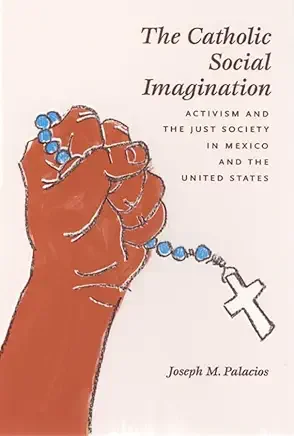
The Catholic Social Imagination: Activism and the Just Society in Mexico and the United States grew out of Joseph Palacios’s ethnographic research among Catholic activists, organizers, clergy, and civic leaders in both countries. At the heart of the book is a paradox that has continued to shape his writing, teaching, and public reflection: Why has Catholic social justice teaching had such a strong influence in the public life of the United States— where Catholics are less than a quarter of the population and church and state are formally separated— while in Mexico, a country with a far larger Catholic majority, that same tradition has had a more limited effect on civil society and government?
Through comparative research in the United States and Mexico, Palacios explores how religious ideas become public practices. The book examines how Catholics imagine justice, organize communities, engage politics, and translate faith into action. It asks why some societies create space for religiously inspired civic engagement while others, despite deep Catholic cultural roots, struggle to connect faith with democratic transformation and social reform.
For Palacios, this question has never remained merely academic. It continues to animate his broader work as a priest, sociologist, writer, coach, and public thinker. The Catholic Social Imagination remains a foundation for his ongoing thought experiments about faith and democracy, conscience and citizenship, activism and the common good. It helps explain why Catholic social teaching is not simply a set of doctrines, but a living moral imagination—one capable of shaping people, institutions, and public life when communities learn how to organize hope into action.